HOME MACHINE · ORIGINAL 3D STUDY
If it cools food, why does its back get warm?
The refrigerant goes round. The heat moves out.
Start with the narrated walkthrough.
See the whole mechanism, then inspect it yourself below.
Take it apart and inspect every system.
Click a part to highlight it and read why it matters.
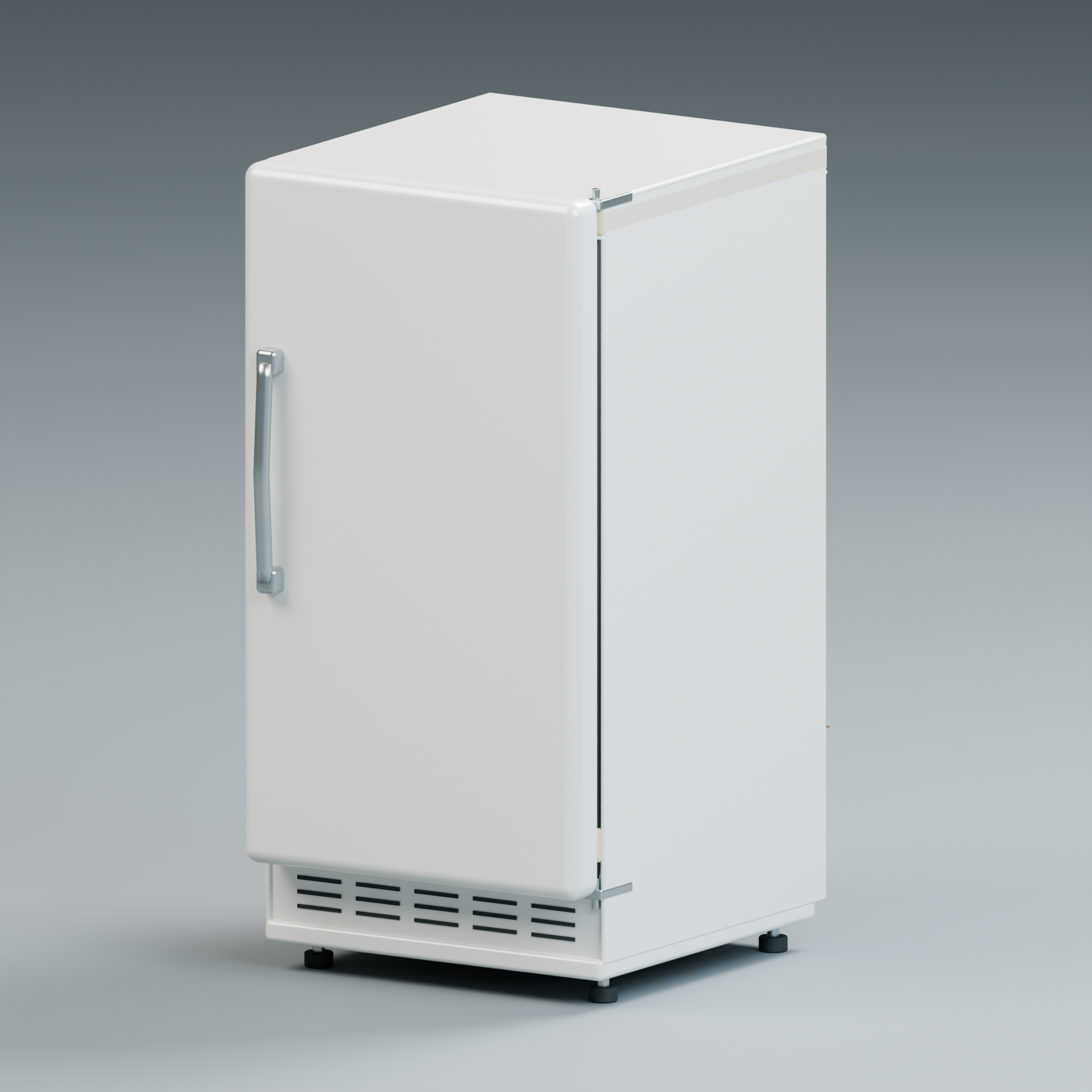
A familiar object. A hidden system.
The refrigerant goes round. The heat moves out.
Cooling means moving heat somewhere else.
One sealed refrigerant loop connects the inside of the cabinet to the room outside. The cabinet opens for inspection, but its pipes stay connected—even in the exploded view. This compact direct-cool example does not represent every refrigerator.
Refrigerant loops inside sealed tubes. Heat moves from cabinet to room.
Read the explanation
Heat crosses the wall. Refrigerant stays inside.In the internal evaporator, refrigerant absorbs heat as it evaporates. The gold arrow represents energy entering through the tube wall. Small dots mark a selected path inside the tubing; they are not droplets sprayed into the food compartment.
The compressor keeps the circuit moving.Vapour returns to the compressor, which raises its pressure before sending it onward. This sealed housing is a schematic module: its internal motor and valves are not modelled. The dots stop at its ports; no invented internal route is shown.
The back gets warm because heat is leaving.At the outside condenser, refrigerant releases heat and condenses towards liquid. The gold arrow points from the exchanger towards the room. The refrigerant remains in its tubing. Colours show stages of the story, not measured temperatures or phase fractions.
A narrow tube creates the next pressure drop.After the sealed filter-drier, the capillary restriction leads towards the lower-pressure evaporator. The loop can then absorb heat again. The filter-drier stays closed in this illustration; no internal media or service procedure is depicted.
Sources and safety
- Danfoss: A refrigerator transfers heat from its cabinet to the surrounding room.
- Danfoss: The evaporator absorbs heat while refrigerant evaporates; the outside condenser releases heat while refrigerant condenses.
- Danfoss: The compressor raises vapour pressure; a capillary restriction leads towards the lower-pressure evaporator.
Refrigerants, pressure, electrical components and hot surfaces can be hazardous. Do not cut, open, recharge or service refrigeration equipment using this illustration. This is not an installation or repair guide.
Scope and limitations
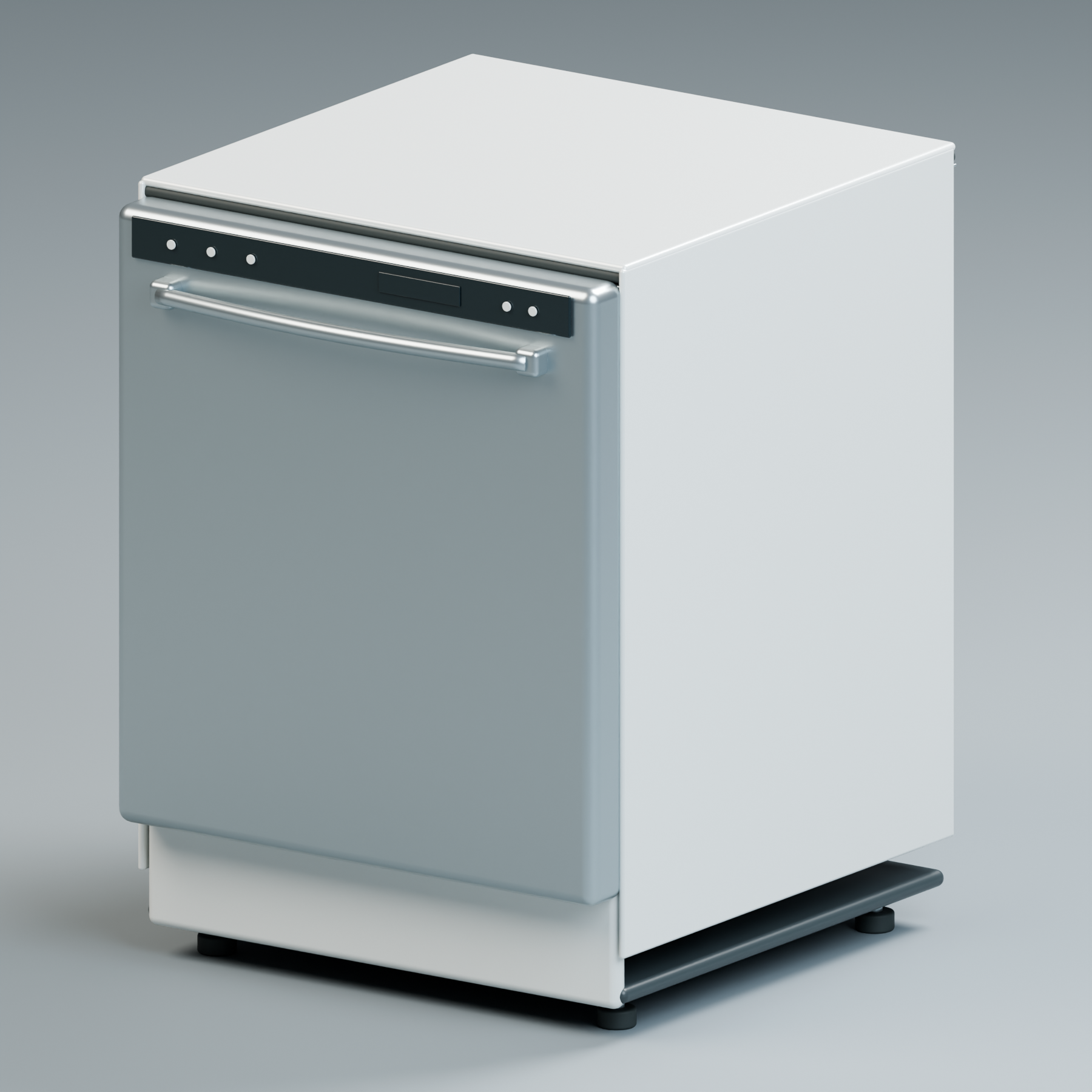
An original compact single-door direct-cool refrigerator: a hermetic compressor, external wire-tube condenser, pencil filter-drier, capillary restriction, internal evaporator and return line. No fans, TXV, defrost system, second circuit or model-specific performance is claimed.
- Original single-door direct-cool vapour-compression refrigerator, not a manufacturer replica or installation drawing.
- One conserved connected circuit. All refrigerant groups share the same explosion displacement; cabinet parts may separate but the loop is not torn into disconnected hoses.
- Tube walls have actual thickness and communicating lumen. Half-wall cut sections are inspection conventions, not a suggestion to cut or open real refrigeration equipment.
- Hermetic compressor and filter-drier remain sealed schematic modules. Their internal valves, motor, media and fluid paths are not depicted; no particle markers are sent through an invented interior.
- Heat-transfer arrows and refrigerant markers must use distinct visual conventions. Refrigerant does not enter the food compartment or room.
- Capillary coil, materials and dimensions are authored illustrations, not measured product specifications, temperatures, pressures, charge, efficiency or service advice.
- No compressor fan or evaporator fan is included: this is a compact natural-convection direct-cool layout.
- Gold arrowheads are schematic energy-transfer annotations, distinct from small refrigerant markers. Neither is a measured heat-flow or fluid simulation.
- Markers stop at the sealed compressor and filter-drier boundaries. The same actual loop is retained when cabinet panels separate.
A refrigerator transfers heat from its cabinet to the surrounding room.Applies to: An original compact single-door direct-cool refrigerator: a hermetic compressor, external wire-tube condenser, pencil filter-drier, capillary restriction, internal evaporator and return line. No fans, TXV, defrost system, second circuit or model-specific performance is claimed. Uncertainty: The arrows show direction only, not heat flow rate or temperature.
The evaporator absorbs heat while refrigerant evaporates; the outside condenser releases heat while refrigerant condenses.Applies to: An original compact single-door direct-cool refrigerator: a hermetic compressor, external wire-tube condenser, pencil filter-drier, capillary restriction, internal evaporator and return line. No fans, TXV, defrost system, second circuit or model-specific performance is claimed. Uncertainty: No measured phase distribution, refrigerant choice or operating pressure is implied.
The compressor raises vapour pressure; a capillary restriction leads towards the lower-pressure evaporator.Applies to: An original compact single-door direct-cool refrigerator: a hermetic compressor, external wire-tube condenser, pencil filter-drier, capillary restriction, internal evaporator and return line. No fans, TXV, defrost system, second circuit or model-specific performance is claimed. Uncertainty: The compressor is a sealed schematic module, not an animated internal mechanism or maintenance drawing.