EVERYDAY PHYSICS · REVIEWED CUTAWAY
Why doesn't an upside-down hummingbird feeder simply drain?
Pressure holds the column until the basin admits another bubble.
Start with the narrated walkthrough.
See the whole mechanism, then inspect it yourself below.
Take it apart and inspect every system.
Click a part to highlight it and read why it matters.
LOOK CLOSER
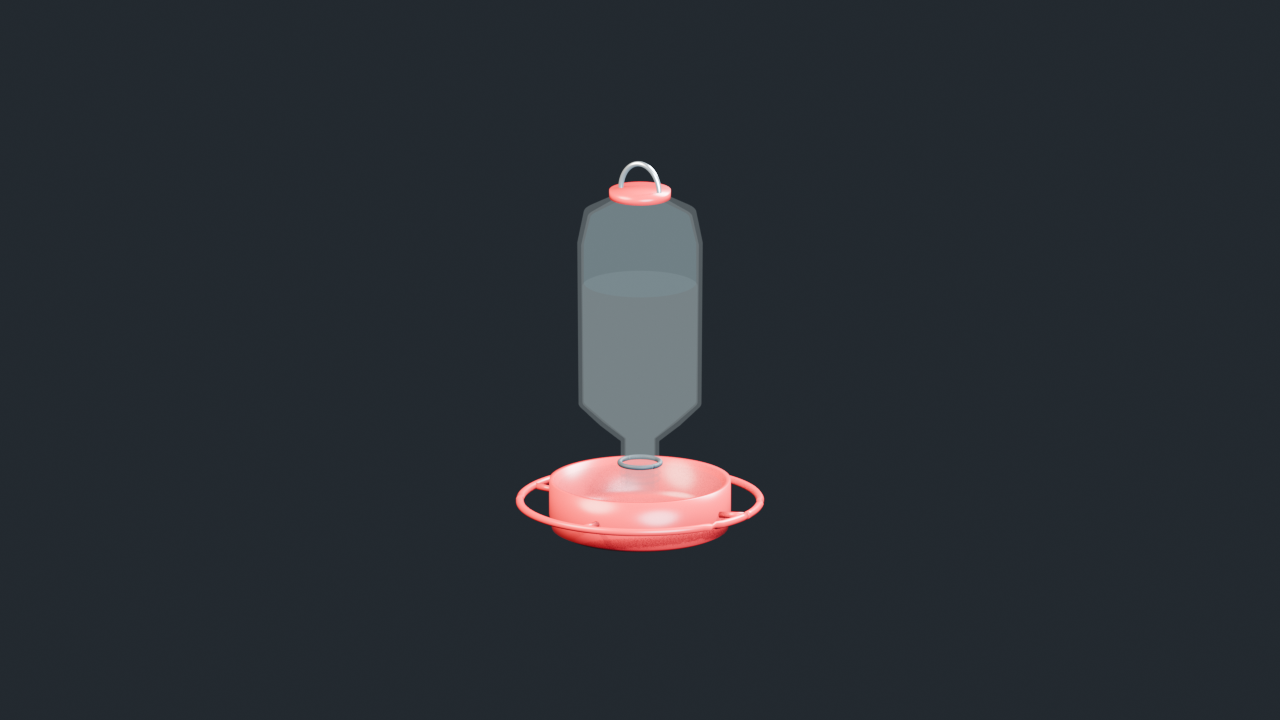
Trapped air pocket
The sealed space above the nectar contains air at reduced pressure—not a perfect vacuum. Outside atmospheric pressure helps oppose gravity.
A reduced-pressure air pocket limits draining. A bubble permits the next refill.
Read the explanation
Trapped air pocketThe sealed space above the nectar contains air at reduced pressure—not a perfect vacuum. Outside atmospheric pressure helps oppose gravity.
Reservoir outletWhen the basin level falls below this submerged outlet, air can enter here and rise into the reservoir.
Lower basinA small release refills the basin until the outlet is covered and the pressure balance returns.
Sources and safety
- Canadian Intellectual Property Office patent CA2665663A1: A sealed inverted reservoir can limit draining through reduced pressure above the liquid and atmospheric pressure acting at the lower basin.
- United States Patent US9198401B2: When the basin level exposes the reservoir outlet, air can enter and allow another small amount of liquid to descend.
- Cornell Lab of Ornithology: Sun-warmed trapped air can expand and push liquid out, causing leakage rather than precise metering.
Use plain white sugar and water rather than honey or dye, keep feeders clean, and refresh solution frequently—especially in hot weather. Follow current bird-care guidance.
Scope and limitations
An inverted sealed-reservoir hummingbird feeder. Saucer feeders use a different mechanism; pressure differences and liquid motion are explained qualitatively.
- The still is not a fluid or pressure simulation.
- Leakage also depends on the real feeder’s seals, temperature, tilt and port details.
A sealed inverted reservoir can limit draining through reduced pressure above the liquid and atmospheric pressure acting at the lower basin.Applies to: An inverted sealed-reservoir hummingbird feeder. Saucer feeders use a different mechanism; pressure differences and liquid motion are explained qualitatively. Uncertainty: The lesson does not calculate a pressure difference or flow rate.
When the basin level exposes the reservoir outlet, air can enter and allow another small amount of liquid to descend.Applies to: An inverted sealed-reservoir hummingbird feeder. Saucer feeders use a different mechanism; pressure differences and liquid motion are explained qualitatively. Uncertainty: Bubble timing and release size depend on the real feeder geometry and liquid conditions.
Sun-warmed trapped air can expand and push liquid out, causing leakage rather than precise metering.Applies to: An inverted sealed-reservoir hummingbird feeder. Saucer feeders use a different mechanism; pressure differences and liquid motion are explained qualitatively. Uncertainty: Seal condition, tilt and port geometry are not quantified here.